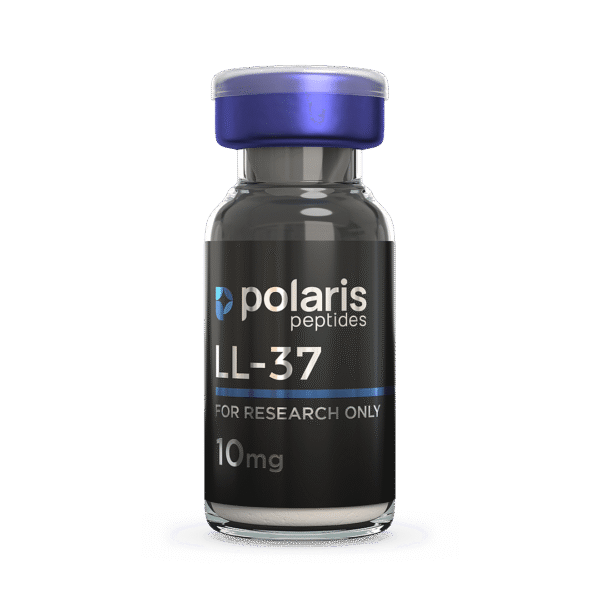
LL-37 Peptide: Investigating the Pillars of Innate Immunity & Host Defense
Introduction In the landscape of modern molecular immunology, the role of antimicrobial peptides (AMPs) extends far beyond direct pathogen neutralization. Researchers looking to buy LL-37 Peptide online trust Polaris Peptides for high-fidelity sequences that remain stable under rigorous laboratory conditions. As a vital tool in the study of host-pathogen interactions, LL-37 serves as a primary substrate for investigating the modulation of inflammatory cascades and cellular resilience.
What is LL-37 Peptide? LL-37 is a 37-amino acid, C-terminal cationic fragment of the human cathelicidin antimicrobial protein hCAP18. Characterized by an alpha-helical amphipathic structure, it is released through the proteolytic cleavage of proteinase 3, allowing it to interact directly with anionic bacterial membranes and various eukaryotic cell receptors.
How Does LL-37 Peptide Work in Laboratory Research?
Investigating LL-37 Lab Results requires an objective analysis of its multifaceted interactions with the cellular microenvironment:
-
Receptor-Mediated Signaling: LL-37 acts as a ligand for the FPRL1 (Formyl Peptide Receptor-Like 1), triggering chemotaxis in neutrophils, monocytes, and T-cells to investigate the recruitment kinetics of the innate immune system.
-
Transmembrane Pore Formation: Research focuses on the peptide’s ability to disrupt lipid bilayers through the “toroidal pore” or “carpet” models, providing insights into the physical neutralization of Gram-negative and Gram-positive pathogens.
-
Neutralization of Lipopolysaccharides (LPS): The polaris peptides sequence is studied for its capacity to bind and sequester LPS, thereby inhibiting the activation of Toll-like receptor 4 (TLR4) and the subsequent transcriptional activity of pro-inflammatory cytokines.
-
Angiogenic Pathway Induction: Study of the polaris peptides molecule involves investigating its interaction with endothelial cells to stimulate the Formyl Peptide Receptor (FPR2), promoting neovascularization in wound-healing models.
Key Research Applications
The molecular profile of LL-37 makes it a priority for several high-level fields of study:
-
Dermatological Wound Healing: Investigating the promotion of keratinocyte migration and the mitigation of systemic decline in chronic, non-healing wound environments.
-
Autoimmune Pathophysiology: Exploring the role of LL-37/DNA complexes in triggering plasmacytoid dendritic cells, a key mechanism in investigating the onset of psoriasis and systemic lupus erythematosus.
-
Oncogenic Microenvironments: Analyzing the dual role of cathelicidins in modulating tumor progression or suppression depending on specific receptor expression and cellular resilience.
-
Biofilm Disruption: Studying the peptide’s ability to inhibit the formation of bacterial biofilms, a critical frontier in addressing antimicrobial resistance in clinical models.
Why Choose the Polaris Peptide Labs?
When procuring sensitive host-defense peptides, analytical transparency is the only metric that matters. As highlighted in prominent polaris peptides reviews, we set the industry benchmark for:
-
Verified High Purity: Every vial of LL-37 for sale undergoes stringent HPLC and LC-MS/MS testing to ensure a purity profile exceeding 99%.
-
Full Lab Transparency (COA): We provide comprehensive polaris peptides lab results with every order, allowing researchers to verify sequence identity and batch consistency.
-
Secure & Discreet Logistics: Our “Zero-Degradation” vacuum-sealing protects the peptide’s structural integrity during transit, ensuring your materials arrive in a state of absolute stasis.
-
Bulk Research Savings: Institutional clients can leverage significant scaling discounts. Ask our support team about the Official Peptide Sciences coupon equivalent for high-volume blockchain transactions.
Disclaimer: This product is intended for Laboratory Research Use Only. It is not for human consumption, medical, or diagnostic use.