Trifluoroacetic Acid: Investigating the Pillars of Peptide Synthesis & Analytical Chemistry
Introduction In the landscape of modern molecular biology and proteomics, the ability to resolve complex biomolecular mixtures depends on the precision of mobile phase additives. Researchers looking to buy Trifluoroacetic Acid online trust Polaris Peptides for high-fidelity reagents that remain stable under rigorous laboratory conditions. As a vital tool in the study of peptide cleavage and purification, Trifluoroacetic Acid serves as a primary substrate for investigating the isolation of high-purity ligands.
What is Trifluoroacetic Acid?
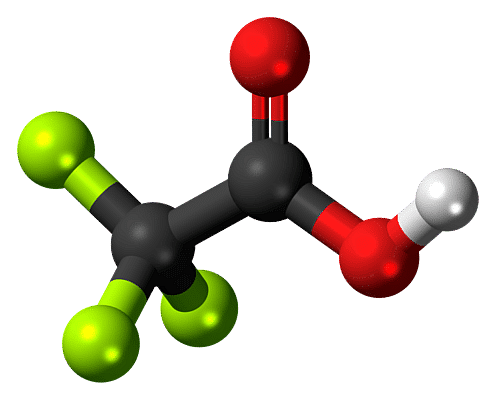
Trifluoroacetic Acid (TFA) is a strong, non-oxidizing acid characterized by its ability to form ion pairs with basic amino acid residues. Structurally, it is the perfluorinated analog of acetic acid, exhibiting high volatility and excellent solubility in both aqueous and organic media, which makes it indispensable for solid-phase peptide synthesis (SPPS).
How Does Trifluoroacetic Acid Work in Laboratory Research?
Investigating Trifluoroacetic Acid Lab Results requires an objective analysis of its interactions with stationary phases and molecular structures:
-
Ion-Pairing Dynamics: TFA acts as a counter-ion that associates with the positively charged amino groups of peptides, effectively increasing their hydrophobicity and Investigating the subsequent enhancement of chromatographic peak resolution.
-
Acid-Catalyzed Proteolysis & Cleavage: Research focuses on the compound’s capacity to facilitate the cleavage of protective groups from synthetic sequences, providing a model to investigate the final liberation of functional peptides.
-
Mobile Phase pH Optimization: The polaris peptides reagent is utilized to maintain a low pH environment, which suppresses the silanol activity of the silica-based stationary phase and ensures predictable retention times.
-
Protein Denaturation and Solubilization: Study of the polaris peptides molecule involves analyzing its ability to disrupt secondary and tertiary protein structures, facilitating high-efficiency mass transfer during analytical runs.
Key Research Applications
The molecular profile of Trifluoroacetic Acid makes it a priority for several high-level fields of study:
-
Proteomic Structural Analysis: Investigating the stabilization of ion pairs during HPLC-MS to determine the impact on peptide mapping and the mitigation of systemic decline in signal sensitivity.
-
Solid-Phase Peptide Synthesis (SPPS): Exploring the role of high-concentration TFA as a deprotection agent, facilitating precise transcriptional activity by ensuring complete side-chain deprotection.
-
Metabolic Bioenergetics Extraction: Analyzing the reagent’s efficacy in the precipitation of biological proteins to investigate cellular resilience and small-molecule metabolites.
-
Macromolecular Crystallography: Studying the interplay between solvent acidity and the structural integrity of protein crystals in models of complex molecular biology.
Why Choose the Polaris Peptides Labs?
When procuring foundational analytical reagents, chemical transparency is the only metric that matters. To maximize your institutional throughput, apply the polaris peptides discount code at checkout. We set the industry benchmark for:
-
Verified High Purity: Every unit of Trifluoroacetic Acid for sale undergoes stringent HPLC and spectroscopic testing to ensure a purity profile exceeding 99.9%.
-
Full Lab Transparency (COA): We provide comprehensive polaris peptides lab results with every order, allowing researchers to verify moisture content, metal traces, and baseline UV absorbance.
-
Secure & Discreet Logistics: Our specialized chemical-resistant packaging protects the reagent’s structural integrity during transit, ensuring your materials arrive in a state of absolute stasis.
-
Bulk Research Savings: Institutional clients can leverage significant scaling discounts. Ask our support team about the Official Peptide Sciences coupon equivalent for high-volume blockchain transactions.
Disclaimer: This product is intended for Laboratory Research Use Only. It is not for human consumption, medical, or diagnostic use.